The Historic Charm of Hyde Park Corner

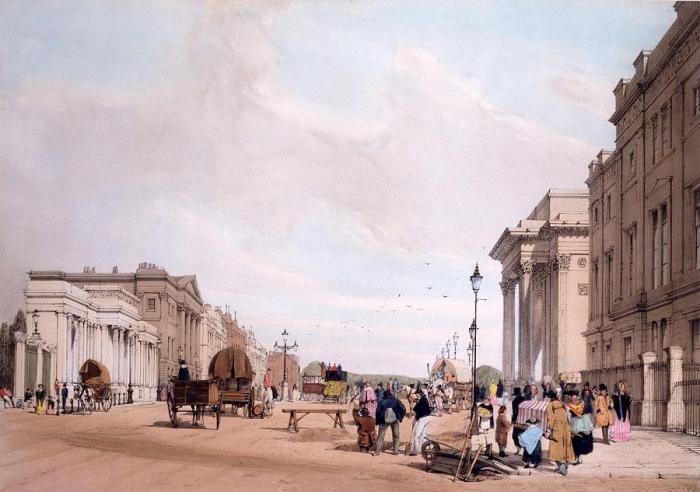
Hyde Park Corner, located in the heart of London, is a place steeped in rich history and architectural splendor. This bustling intersection, known for its iconic landmarks, offers a unique blend of history and modernity that captivates tourists from all around the world.

Hyde Park Corner was first designed in 1824-1825 by the acclaimed architect, Decimus Burton. It’s home to some of London’s most renowned monuments, including the Wellington Arch, a magnificent triumphal arch commemorating Britain’s victory in the Napoleonic Wars. This landmark, completed in 1830, doubles as a unique vantage point offering panoramic views of London.

One of the most notable features of Hyde Park Corner is the Australian War Memorial, a poignant tribute to the Australian servicemen and women who lost their lives during World War I and II. This awe-inspiring monument, unveiled in 2003, features the names of Australian towns, immersing visitors in a powerful narrative of heroism and sacrifice.

Another must-visit attraction is Apsley House, also known as Number One, London. This grand edifice, once the residence of the first Duke of Wellington, now serves as a museum showcasing fascinating collections of art and period furnishings.

Commonly asked questions about Hyde Park Corner include: What landmarks are at Hyde Park Corner? What is the history of Hyde Park Corner? And, is Hyde Park Corner free to visit? Hyde Park Corner is home to numerous landmarks including Wellington Arch, the Australian War Memorial, and Apsley House. It was designed in the early 19th century and has become a significant historic and cultural hub. Visiting Hyde Park Corner is free, though certain attractions may require an entrance fee.

With its rich tapestry of history and its architectural marvels, Hyde Park Corner is more than just a busy intersection in London. It’s a gateway to the past, a place where every monument tells a story, and a destination that leaves every visitor with a deeper appreciation for the city’s history. So, whether you’re a history buff or simply a traveler seeking unique experiences, Hyde Park Corner promises a journey you won’t soon forget.

Di Shaun Ferguson, CC BY-SA 2.0, https://commons.wikimedia.org/w/index.php?curid=13527828

The History of the Wallace Collection London

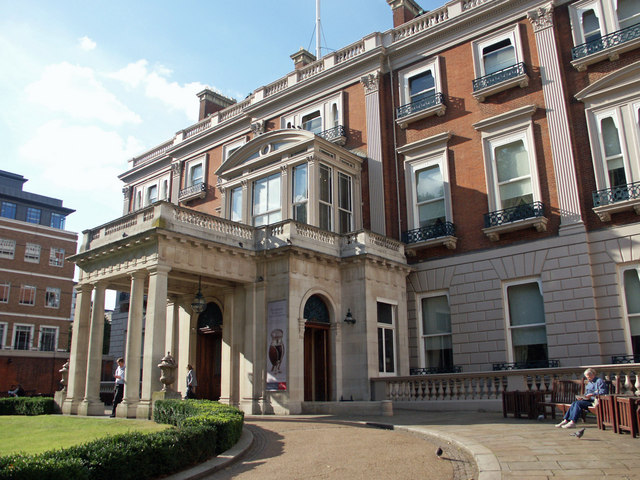
Located in the heart of London, the Wallace Collection is a hidden gem that houses an impressive array of art and historical artifacts. Established in 1897, the collection was bequeathed to the British nation by Lady Wallace, the widow of Sir Richard Wallace. The museum is housed in Hertford House, a stunning 18th-century townhouse in Marylebone.

The collection boasts an extensive range of artworks, including paintings, sculptures, furniture, and armor. Visitors can admire masterpieces by renowned artists such as Titian, Rembrandt, and Velázquez. The museum’s armor collection is also a highlight, with pieces dating back to the medieval period.

One of the most famous pieces in the collection is “The Laughing Cavalier” by Frans Hals, a portrait that has become an iconic image of the museum. The opulent Great Gallery, with its stunning chandeliers and silk-covered walls, is a must-see.

FAQs about the Wallace Collection London:

  • What are the opening hours of the Wallace Collection? The museum is open daily from 10 am to 5 pm, except on December 24-26.
  • Is there an entrance fee to visit the Wallace Collection? No, admission to the museum is free for all visitors.
  • Are there guided tours available? Yes, the museum offers guided tours for those who want a more in-depth experience.

Whether you’re an art enthusiast or simply looking to explore a lesser-known London attraction, a visit to the Wallace Collection is sure to be a rewarding experience. Immerse yourself in the history and beauty of this remarkable museum and uncover the treasures within its walls.

By Anthony O’Neil, CC BY-SA 2.0, https://commons.wikimedia.org/w/index.php?curid=14358913

can health problems cause anxiety

The question, “can health problems cause anxiety?” is a pertinent one, particularly within the realm of dermatology. It is a well-established fact that physical health issues can and do contribute to psychological distress, including anxiety. When it comes to skin health, the correlation becomes even more pronounced.

Skin conditions, ranging from acne to more complex dermatological concerns, can significantly impact an individual’s self-esteem and overall mental well-being. This is due to the visible nature of these conditions, which can lead to feelings of embarrassment, self-consciousness, and in more severe cases, social isolation.

Indeed, the relationship between skin conditions and anxiety is bi-directional. Not only can skin problems lead to anxiety, but stress and anxiety can also exacerbate existing skin conditions. This creates a cyclical pattern where one feeds into the other, often making it challenging to break free from this loop.

Consider the case of acne, for instance. Acne, a common skin condition, can lead to anxiety due to societal pressure and stigmatization. The individual may feel judged, leading to increased stress levels, which in turn can trigger more acne breakouts. This cycle can be mentally and emotionally draining, creating a state of constant anxiety.

The same applies to conditions like psoriasis and eczema, where flare-ups are often tied to stress and anxiety. These conditions, characterized by red, itchy, and scaly skin, can be uncomfortable and visually noticeable, leading to heightened anxiety levels.

Therefore, it becomes crucial to address both the physical and psychological aspects of skin health. Dermatologists, along with mental health professionals, can play a pivotal role in this regard. By providing comprehensive treatment plans that tackle both the skin condition and associated anxiety, individuals can better manage their overall health and well-being.

In the quest for better skin health, it’s essential not to overlook the psychological component. Understanding the interplay between skin conditions and anxiety can pave the way for more holistic and effective treatment approaches. Remember, your skin health is not just about your physical appearance; it’s a reflection of your mental and emotional state as well.

Heading: Discovering the 32 London Boroughs – A Historical Journey

London, the capital of England and the United Kingdom, is a city steeped in history and culture. Home to many renowned landmarks such as the Tower of London, Buckingham Palace, and the British Museum, it also consists of 32 boroughs, each with its own unique character and charm. In this blog post, we’ll take a journey through these boroughs, exploring their history and what makes them a must-visit destination for tourists.

The city of London is divided into 32 boroughs, a system that was established in 1965 to facilitate more efficient administration. These boroughs range from the bustling city center locales such as Westminster and Camden to the more suburban, like Bexley and Bromley. Each borough is governed by its own local council, which is responsible for providing many of the local services.

Commonly asked questions about the London boroughs include: “How many boroughs are there in London?” and “What is the history behind these boroughs?” To answer these, London has 32 boroughs, and they were established in 1965 when the London Government Act 1963 was enacted to streamline the administration of the city.

Among these 32 boroughs, Westminster is arguably the most famous. Known as the political hub of London, it houses the Houses of Parliament and the iconic Big Ben. On the other hand, the borough of Greenwich is renowned for its maritime history and is recognized as the ‘home of time’, with the Prime Meridian line located at the Royal Observatory.

Kensington and Chelsea, another well-known borough, is notable for its wealth and exclusivity. It is home to the Natural History Museum, the Victoria and Albert Museum, and the luxury department store Harrods. Conversely, the borough of Hackney has a more bohemian vibe, renowned for its artistic community, vintage shops, and vibrant nightlife.

Exploring the 32 boroughs of London is like embarking on 32 different journeys, each offering a unique glimpse into the city’s rich history and diverse culture. From the regal atmosphere of Kensington and Chelsea to the lively streets of Hackney, there’s always something new to discover in every corner of this fascinating city. So, the next time you’re in London, why not venture beyond the usual tourist spots and delve into the unique charm of its varied boroughs? You never know what hidden gems you might uncover.

Rosacea: Reclaim the Glow of Your Skin

Are you grappling with a persistent, red flush across your cheeks that seems to never fade? Perhaps you’ve noticed small, visible blood vessels or bumps on your skin that weren’t there before. If this sounds familiar, you might be dealing with Rosacea, a common, but often misunderstood skin condition. While the idea of ‘curing’ Rosacea may seem daunting, it’s important to remember that while there isn’t a definitive cure yet, the condition can be effectively managed, letting you reclaim the natural glow of your skin.

Rosacea, simply put, is a chronic skin condition that primarily affects the face. It often presents as a persistent redness, often accompanied by visible blood vessels and sometimes small, red, pus-filled bumps. As a dermatologist, I assure you that you are not alone. Millions of people worldwide experience the same concerns, and just like them, you too can successfully manage this condition.

Now, you might be wondering, “If Rosacea cannot be cured, why should I seek treatment?” The answer lies in the power of effective management. While Rosacea can’t be eliminated completely, the symptoms can be significantly reduced and controlled with the right treatment plan. This can help prevent the condition from progressing, and more importantly, it can drastically improve your quality of life.

Treatment options for Rosacea are vast and tailored to your specific needs. They range from topical creams and gels, oral medications to laser treatments, and more. Topical treatments are often the first line of defense, helping to reduce inflammation and redness. Oral antibiotics can also be used to treat any inflammation in your skin. For visible blood vessels and severe redness, laser treatments can be an effective solution.

The key to managing Rosacea lies in understanding your personal triggers. These could be anything from sun exposure, stress, spicy foods, or certain skincare products. By identifying and avoiding these triggers, you can significantly reduce flare-ups.

Remember, it’s not about finding a cure, but about managing the symptoms and preventing progression. It’s about reclaiming your confidence, your comfort, and the natural glow of your skin. As a dermatologist, I’m here to guide you on this journey. Don’t let Rosacea control your life. Take the first step today towards managing this condition and start your journey towards healthier, happier skin.

While we may not have a definitive cure for Rosacea, we do have effective ways to manage it. So, if you’re tired of the constant redness and the unpredictable flare-ups, reach out to a dermatologist today. Your skin deserves the best care, and managing Rosacea is the first step towards providing it with just that.

Are Acne Scars Permanent?

If you’ve ever dealt with acne, you know how frustrating it can be. Not only does it affect your self-confidence, but it can also leave behind unsightly scars. The question on everyone’s mind is: are acne scars permanent?

The good news is that acne scars don’t have to be a lifelong burden. With the right treatment and care, you can significantly reduce their appearance and even make them disappear completely.

There are different types of acne scars, and each one requires a specific approach. The most common types include ice pick scars, boxcar scars, and rolling scars. Ice pick scars are deep and narrow, while boxcar scars are wider and have sharp edges. Rolling scars, on the other hand, have a wave-like appearance.

One of the most effective treatments for acne scars is laser therapy. This non-invasive procedure uses laser technology to stimulate collagen production, which helps to fill in the scars and smoothen the skin’s texture. Laser therapy can be tailored to target specific types of scars, making it a versatile option for all skin types.

Another popular treatment option is dermal fillers. These injectable substances can fill in depressed scars, giving the skin a more even and youthful appearance. Dermal fillers are temporary solutions, but they can last for several months before a touch-up is needed.

Chemical peels and microdermabrasion are also effective in reducing the appearance of acne scars. These procedures work by exfoliating the top layer of the skin, revealing fresh and healthy skin underneath. Over time, this can help to fade the scars and improve the overall texture of the skin.

In addition to professional treatments, there are also several at-home remedies that can help fade acne scars. These include applying topical creams or gels containing ingredients like retinol, vitamin C, or hyaluronic acid. Regular exfoliation and moisturization can also promote cell turnover and improve the skin’s appearance.

While acne scars can be stubborn, they are not permanent. With the right combination of treatments and a consistent skincare routine, you can minimize their appearance and regain your confidence. Remember, everyone’s skin is unique, so it’s important to consult with a dermatologist to determine the best approach for your specific needs.

So, don’t let acne scars hold you back. Take control of your skin and say goodbye to those pesky reminders of your past breakouts. You deserve to feel comfortable and confident in your own skin, and with the right treatment, that’s exactly what you can achieve.

Notting Hill CarnivaL

An explosion of culture, color, and community spirit, the Notting Hill Carnival is a must-see spectacle for any visitor to London. This vibrant event, held annually in West London’s Notting Hill district, is one of the world’s largest street festivals. It’s a celebration of London’s rich, multicultural heritage, specifically its Caribbean community. Prepare yourself for a sensory overload of elaborate costumes, pulsating music, and tantalizing Caribbean cuisine.

The Notting Hill Carnival originated in 1966 as a local festival organized by the neighborhood’s Caribbean immigrants. It was a way to counteract racial tensions and celebrate their cultural heritage. Over the years, the carnival has grown into a massive event, attracting millions of visitors. The festival is famous for its grand parade featuring live Caribbean music, including reggae and calypso, steel bands, and participants adorned in feathered and sequined costumes. The air fills with the aroma of traditional Caribbean food, adding to the authentic experience. The carnival is not just a feast for the senses, but also a symbol of unity, diversity, and the multicultural spirit of London.

Getting to the Notting Hill Carnival is easy. The event takes place in the streets of Notting Hill, Ladbroke Grove, and Westbourne Park. The nearest tube stations are Notting Hill Gate, Westbourne Park, and Ladbroke Grove. However, due to the carnival, some stations may be exit-only or closed early, so it’s advisable to check the Transport for London website for updates.

FAQs:

  1. When does the Notting Hill Carnival take place?
    The carnival takes place annually on the August bank holiday weekend, Sunday and Monday.
  2. Is there an entrance fee for the carnival?
    No, the carnival is a free event.
  3. Is the carnival family-friendly?
    Yes, the Sunday of the carnival is traditionally known as ‘Children’s Day’ with events suitable for all ages.
  4. What kind of music can I expect at the carnival?
    Expect a mix of Caribbean music, including reggae, calypso, and soca, along with live steel bands.
  5. Are there food and drink stalls at the carnival?
    Yes, there are numerous stalls selling traditional Caribbean food and drink.

The Notting Hill Carnival is a fantastic opportunity to immerse yourself in London’s diverse cultural landscape. It is more than just a carnival; it’s a testament to the city’s multicultural spirit and an expression of community solidarity. So, why wait? Dive into the rhythm of the carnival, savor the flavors of the Caribbean, and let the vibrant energy of Notting Hill sweep you off your feet.

The Notting Hill Carnival is a true embodiment of London’s multicultural spirit. Its vibrant sights, sounds, and tastes offer a unique and unforgettable experience. Whether you’re a music enthusiast, food lover, or just a curious traveler, the carnival promises something for everyone. So, come and experience the magic of the Notting Hill Carnival. It’s not just a visit, it’s a celebration of life, love, and unity.

Freezing Skin: A Dermatologist’s Solution for Enhanced Skin Health

Are you tired of dealing with stubborn skin imperfections that refuse to go away? Have you ever wondered if there is a quick and effective solution to improve the health and appearance of your skin? Look no further! As a qualified dermatologist, I am here to introduce you to a revolutionary technique that can address a wide range of skin concerns. Discover the power of freezing skin, a cutting-edge treatment that can transform your skin and boost your confidence. It’s time to take control of your skin health and unlock a new level of radiance!

When it comes to our skin, it is essential to understand the causes of various conditions and take prompt action to address them. Freezing skin, also known as cryotherapy, is a non-invasive dermatological procedure that involves applying extreme cold to targeted areas of the skin. This technique can effectively treat a multitude of skin issues, including warts, skin tags, sunspots, and even precancerous lesions.

If left untreated, these skin conditions can not only affect your appearance but also pose potential risks to your overall health. Skin tags and warts, for instance, can cause discomfort and may even bleed if irritated. Sunspots, on the other hand, are often a result of prolonged sun exposure and can increase the risk of skin cancer if not treated in time. By seeking the expertise of a dermatologist and exploring the option of freezing skin, you can address these concerns proactively and safeguard your skin health.

While over-the-counter remedies might promise temporary relief, they often fail to provide a long-lasting solution. Dermatologists, on the other hand, have the knowledge, experience, and advanced tools to effectively freeze and eliminate these skin imperfections. By seeking professional guidance, you can ensure that your skin receives the best possible care and achieve optimal results.

Don’t let skin concerns hold you back any longer. Take the first step towards healthier, more radiant skin by contacting a dermatologist today. Together, we can explore the benefits of freezing skin and unlock a world of possibilities for your skin health. Remember, your skin deserves the best care, and with freezing skin, you can restore your confidence and embrace a new, rejuvenated you.

What tourist love about Primrose Hill, London

Primrose Hill is a beautiful park located in North London, a popular destination for tourists visiting the city. One of the main reasons that tourists love visiting this park is the stunning panoramic views of the London skyline. From the top of the hill, visitors can see some of the city’s most iconic landmarks, such as the Shard, the BT Tower, and St. Paul’s Cathedral. Keep reading to learn more about why tourist loves this place.

Here are several reasons why visitors love this place

Scenic Beauty: The park is a popular spot for outdoor activities, such as picnics, sunbathing, and kite flying. It has an expansive green space that provides ample room for visitors to relax and enjoy the fresh air, and several walking paths and trails allow visitors to explore the park’s natural beauty.

Trendy Neighbourhood: The park is located in a vibrant and stylish community, with many cafes, restaurants, and shops nearby. This makes it an ideal destination for visitors who want to experience London’s local culture and cuisine.

The Location: The park is strategically located near several popular attractions, such as London Zoo and Camden Market.

Conclusion 

Primrose Hill offers a unique and enjoyable experience for tourists visiting London. Whether visitors want to take in stunning views, enjoy outdoor activities, or immerse themselves in the local culture, Primrose Hill has something to offer everyone.

How to reduce and prevent hyperpigmentation?

Excessive exposure to the sun is the primary cause of hyperpigmentation, which manifests as irregularly darkened areas or spots on the skin. It typically happens because of an underlying inflammatory condition. Skin discolouration that is noticeably darker than the normal skin around it occurs when inflammation has subsided.

How to Reduce and Prevent Hyperpigmentation

Exfoliate Regularly

Exfoliating is essential if you want your dark spots to go. Choose a chemical exfoliator to eliminate dead skin cells, speed up cell turnover, fade dark spots, and improve your skin’s overall appearance.

Wear Protective Clothing

Avoiding sun-induced hyperpigmentation requires taking preventative measures such as using sunscreen and wearing protective gear. Sun protection gear such as hats and sunglasses should be worn, and time spent outdoors should be minimal.

Don’t Skip SPF

It is vital to prevent sun damage leading to darkened skin. The most straightforward preventative approach is to use sunscreen whenever you go outside, even on cloudy days.

Avoid Skin Picking

In addition to spreading infection, picking at cuts, sores, and acne can irritate the skin, create irritation, and result in problems, including hyperpigmentation, scarring, and dark patches.

Incorporate Skincare Products

We understand that it may seem impossible to get rid of black spots entirely, but there are certain things you can do at home to lessen their appearance. One of these is to use a topical vitamin C serum. These reduce oxidative stress in the skin by neutralising free radicals.

Laser Treatment

Laser treatments eliminate excess melanin by dissolving it to flush it out of the body. The treatment’s efficacy may only become apparent after several sessions.